

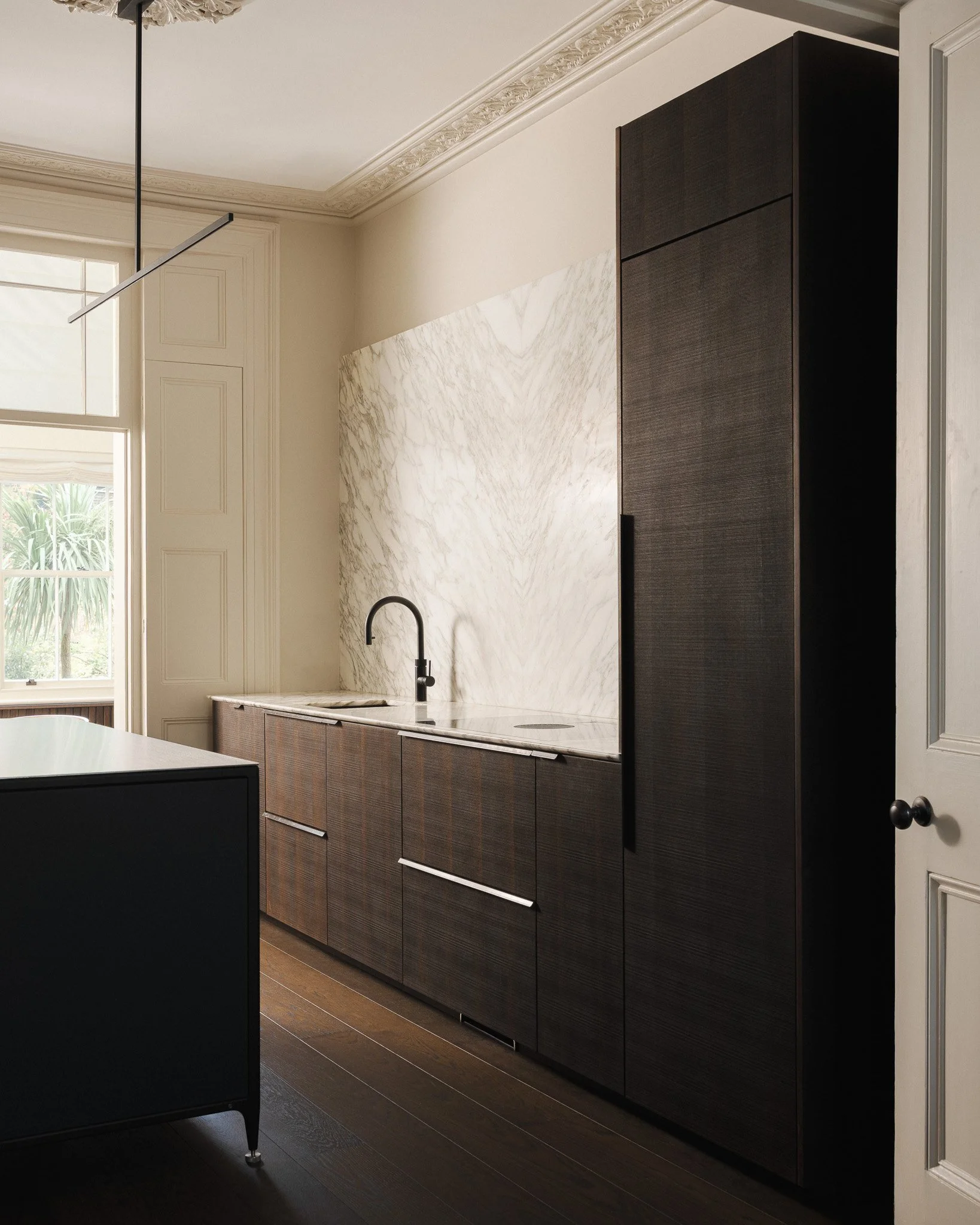
GRADE II LISTED BUILDING DEEP RETRO-FIT
Barnsbury Townhouse
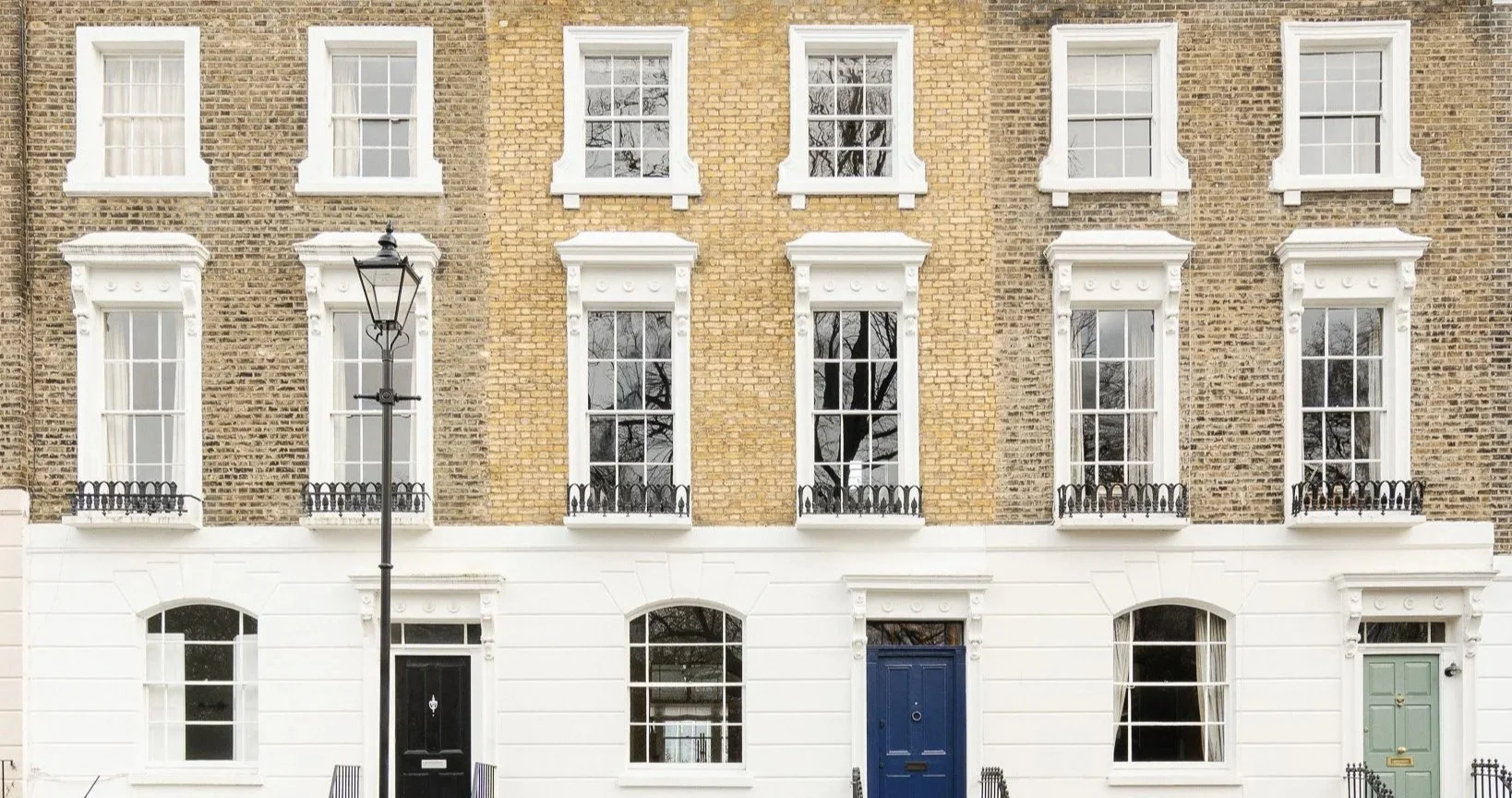
A Grade II listed Georgian townhouse sensitively reconfigured for modern family life, with listed building consent and planning approval secured through Islington Council.
Key transformations
Relocated kitchen from basement to ground floor, navigating listed building consent.
Converted basement into a self-contained guest suite with ensuite and direct garden access.
Stripped back unsympathetic alterations to reveal and restore original period features including marble fireplaces, cornicing, and entrance mouldings.
Undertook a comprehensive deep retrofit of damp proofing, plumbing, and electrical systems while retaining all original skirtings, architraves, and floorboards.
Integrated bespoke contemporary joinery and natural materials in dialogue with the historic fabric throughout.

Heritage Context
Grade II listed building within the Barnsbury Conservation Area, London Borough of Islington.
Approvals
Listed building consent + planning permission via London Borough of Islington.
Scope
Whole-house renovation, plan reconfiguration, period feature restoration, rebuild of the rear first floor conservatory, contemporary kitchen and bathroom.
Services
Architecture, interior design, planning, and project management.
Project Type
Long-term family home.
Value Indicator
Typical project range £350k to £750k +VAT
Architect & Design Team
Principal Designer: Daniel Rees
RIBA No. 12018397 · ARB No. 080523H
Project Architect: Sherry Khodabakhsh
BIID Membership No. 68352
The Brief
The clients acquired this Grade II listed Georgian townhouse and wanted it to work for their family life, improving flow, upgrading services, and restoring character compromised by previous alterations, while navigating listed building consent for every intervention.
Improve spatial flow between principal rooms.
Reclaim period character lost to unsympathetic previous works.
Upgrade kitchen, bathrooms, and services to contemporary standards within listing constraints.
Improve thermal comfort without damaging historic fabric.
Constraints
Grade II listing extends statutory protection to both the exterior and interior of the building. Every alteration (structural, decorative, or service-related) must be justified against the building's assessed heritage significance and approved through listed building consent.
Internal and external works equally controlled, unlike conservation area-only properties, interior changes require consent.
Original features subject to retention: cornicing, joinery, fireplaces, floor layouts, staircase.
Material specifications must be compatible with Georgian fabric, lime plasters, linseed-based finishes, matching timber profiles.
Services routing designed to avoid chasing into historic walls or damaging original plasterwork.
Structural modifications require heritage impact assessment and conservation officer approval.
Window repairs must satisfy both heritage appearance standards and building regulations.
Planning & Listed Building Consent
Most listed building projects begin with a specific request: an extension, a reconfigured layout or a particular design idea.
Many architects will develop proposals around these requests and seek early feedback through a pre-application submission before progressing the design further. While this can be appropriate in some circumstances, it can also add many months to the programme before a planning application is submitted.
Our approach is different.
Rather than starting with a proposed solution, we begin by understanding what the client wants to achieve from their home. We then work alongside our Heritage Consultant, a former Conservation Officer, to understand the opportunities and constraints of the building before developing a design strategy.
This allows us to identify what is likely to be acceptable, avoid unnecessary work and focus the design process on achieving the client's objectives rather than testing assumptions.
We also work closely with our in-house Planning Consultant throughout the application process. This enables ongoing dialogue with planning officers while applications are live, allowing issues to be addressed proactively and refinements to be made where necessary.
The result is a more informed and efficient route through planning and listed building consent, helping clients reach an approved scheme more quickly and with greater certainty.
Using this approach, we have never received a refusal for a Grade II listed residential project in Islington. If you’re interested, we explore how careful refurbishment, listed building expertise and a whole-house strategy can help transform Georgian and Victorian houses for contemporary living in one of our journals:
Islington Architects: Residential Refurbishment in North London
Heritage approvals and decision sequencing
Listed building consent is a statutory process, separate from planning permission, that controls any works affecting a listed building's character. The process rewards precise specification and a clear understanding of what the listing protects. Ambiguity or incomplete submissions lead to refusal or delay.
Heritage significance assessment
A detailed survey and analysis of the building's listed features and architectural character, establishing what is significant and why. This document governs every subsequent design decision.
Professional collaboration with Architects, Heritage Consultancy, and Planners
Using experienced professionals to engage with the council and to assess the building, lead the design, and prepare the documentation.
Design development within constraints
Scheme refined to satisfy heritage requirements, building regulations, and client brief simultaneously, not sequentially.
Listed building consent application
Formal submission including heritage impact statement, detailed architectural drawings, material specifications, and construction methodology.
Planning permission coordination
Separate application for external alterations, aligned with conservation area policies and the listed building consent position.
Construction compliance
Works monitored on site to ensure approved materials, methods, and details were executed as specified in the consent.
Performance and longevity
Heritage Restoration
Original cornicing, timber joinery, and fireplaces repaired and restored using lime plaster, linseed paint, and matching timber profiles.
Services
Full rewire and replumb with routing designed to avoid intervention to historic fabric – no chasing into original walls.
Windows
Original sash windows overhauled, draught-stripped, and fitted with slim-profile secondary glazing where appropriate.
Durability
Material selections prioritised compatibility with Georgian construction and low long-term maintenance.
Sustainability
Thermal performance
Discreet insulation added where feasible – internal wall insulation to non-significant surfaces, floor insulation, loft insulation – without compromising listed fabric.
Airtightness
Improved draught-proofing to windows, doors, and floor junctions, reducing heat loss without irreversible alteration.
Existing fabric retained
Reuse and repair of original materials rather than replacement – the lowest-carbon approach to building renovation.
Future-proofing
Services infrastructure sized for potential future heat pump installation; design decisions made with long-term adaptability in mind.
Key Moves
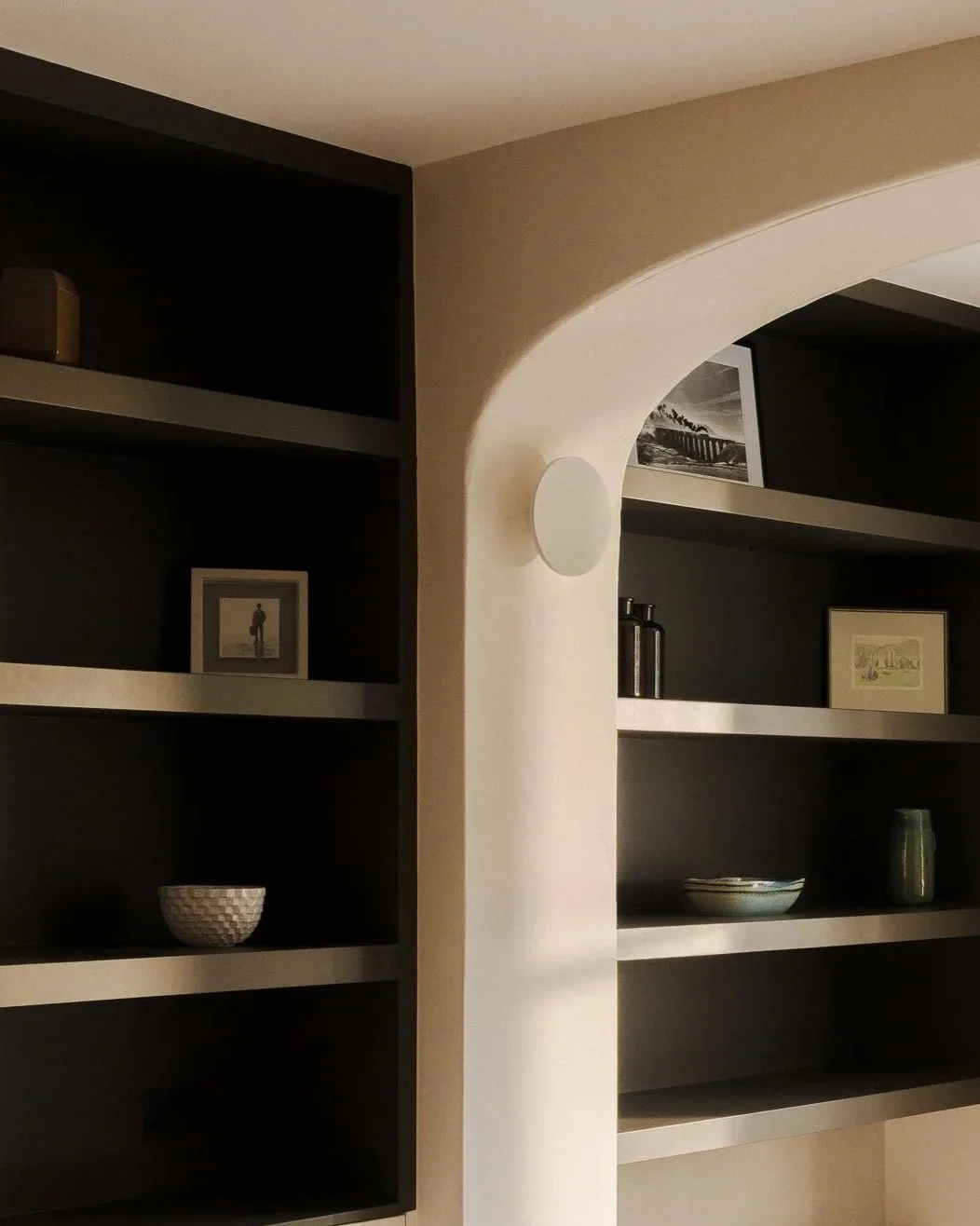
Restored Georgian proportions
Unsympathetic alterations were removed to reinstate the building's original proportions, hierarchy and flow, creating spaces that feel calmer, clearer and more coherent.
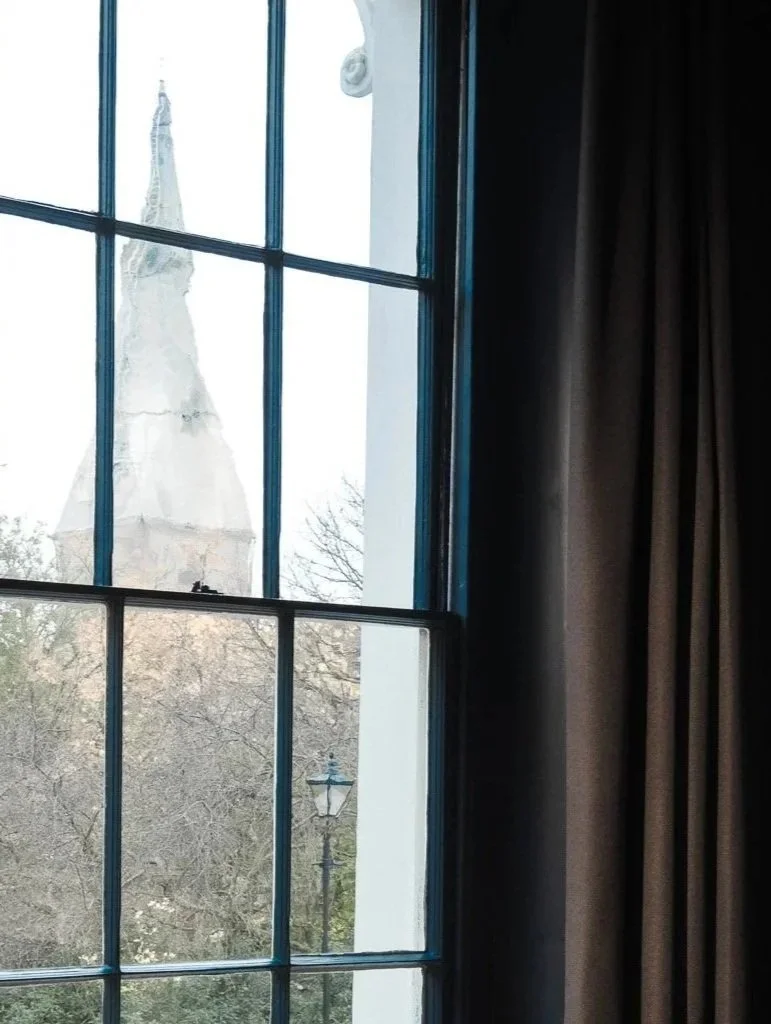
Heritage fabric, contemporary comfort
Historic fabric was carefully restored using traditional materials and techniques, while underfloor heating, integrated lighting and mechanical ventilation were discreetly introduced in a way that remains reversible and non-damaging to the listed fabric.
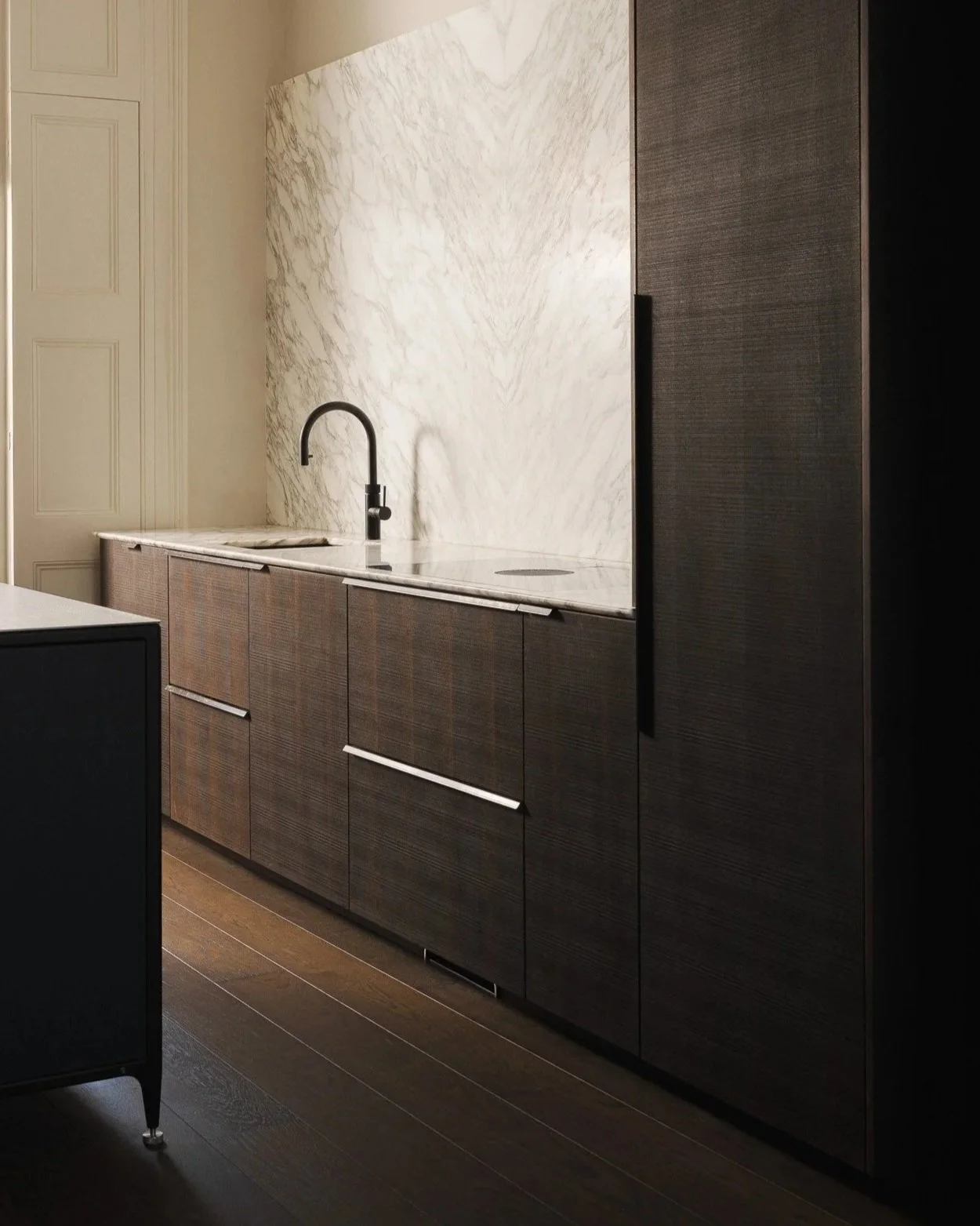
Kitchen within listed fabric
The kitchen was conceived as a series of bespoke furniture elements rather than a fitted installation, allowing it to sit comfortably within the Georgian interior while meeting the needs of modern family life.
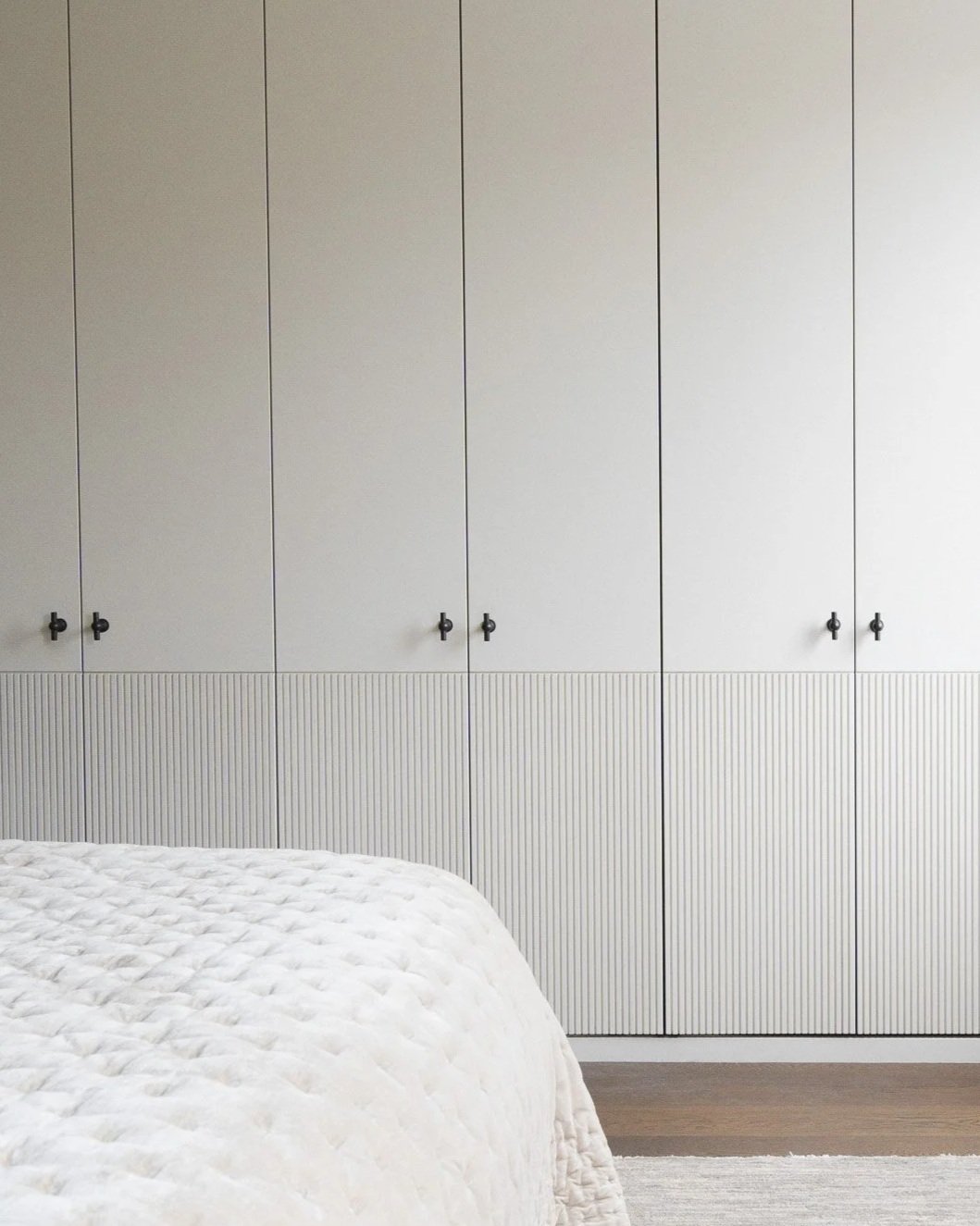
Material continuity
New interventions take direct cues from the existing building, creating a contemporary, materials-led interior where every addition feels connected to the house's history rather than sitting apart from it.
"Working with a listed building starts with understanding what makes it special in the first place. It's not just about preserving original features, it's about understanding the principles behind how the building was designed, constructed and intended to function. From there, the challenge is how you carefully build upon that to support modern living. That might be introducing new services, improving environmental performance, restoring historic fabric or making targeted alterations to the layout. Every decision needs to respect the original building. Something as simple as choosing the right plaster can have a significant impact. Traditional materials allow historic brickwork to breathe and perform as intended, helping to protect the building for the future. The same thinking applies at every scale, from integrating plumbing and electrics without damaging original fabric, to creating new openings or adapting spaces while respecting the hierarchy, proportions and character of the house.
When it's done well, the result doesn't feel like a collection of old and new elements. It feels like a natural continuation of the building's story."

Daniel Rees, Director & Lead Architect
Considering work to a listed building?
A commitment-free conversation to discuss feasibility, constraints, and next steps. Complete our form and a member of our team will be in touch shortly to arrange your meeting with Daniel Rees.
London projects typically range from £300k+ construction value