Islington Architects: Residential Refurbishment in North London
-
Daniel Rees is the Founder and Design Director of Rees Architects. He is an RIBA-qualified Architect with over 20 years of experience delivering high-quality design solutions for residential and commercial clients. Daniel has a passion for creating bespoke, sustainable, and functional spaces that enhance both lives and the environment.
RIBA Membership No. 12018397 · ARB Registration No. 080523H
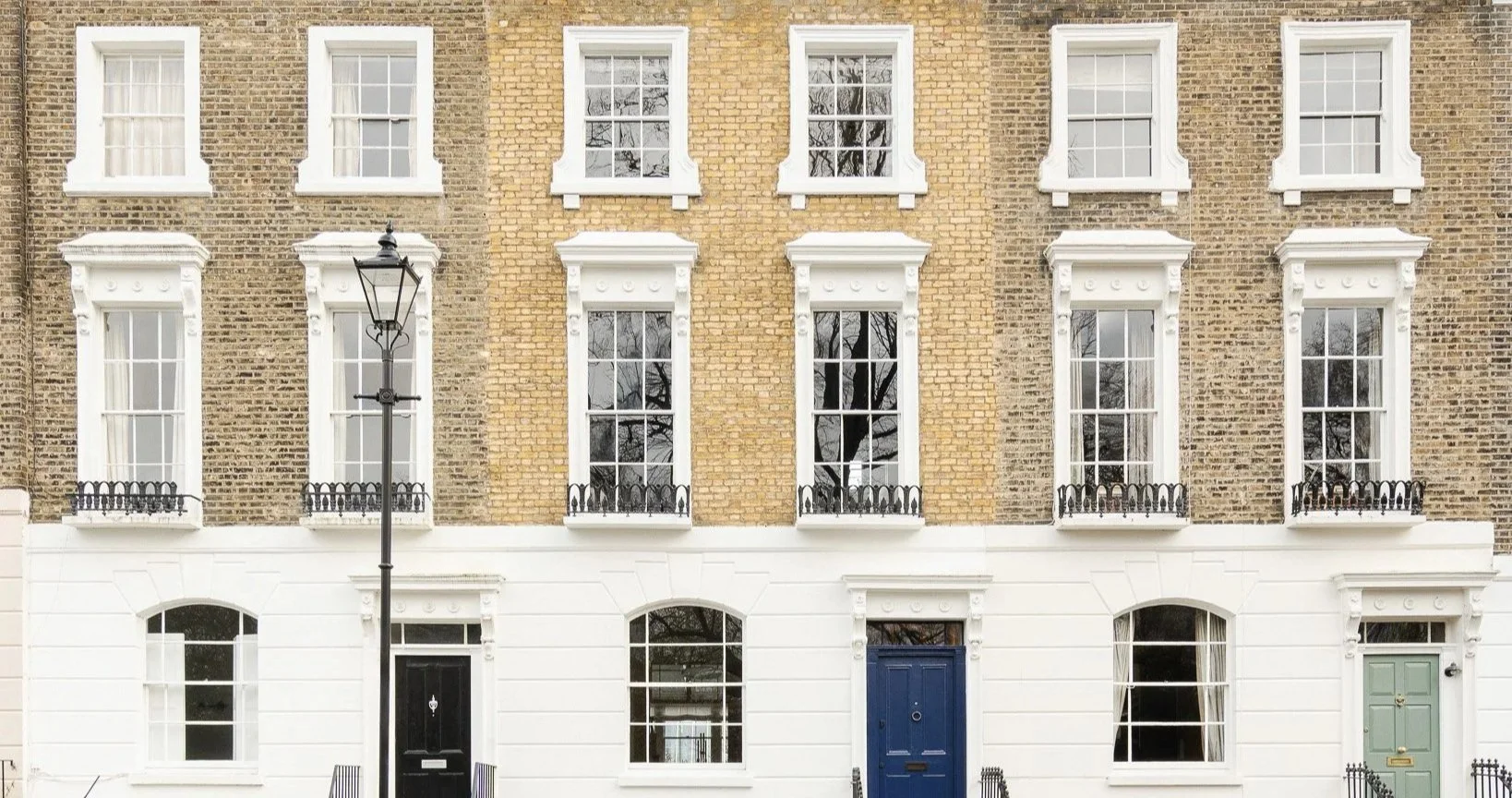
A listed townhouse in Barnsbury, carefully refurbished to balance heritage character and contemporary living.
We regularly work on residential refurbishment projects across Islington, most recently a Grade II listed building within the Barnsbury Conservation Area and a number of homes across the wider borough.
Islington's Georgian and Victorian houses offer exceptional character, proportion and craftsmanship. However, they also present a consistent challenge: how to adapt historic homes to support contemporary living without compromising the qualities that make them special.
Many of our clients initially approach us with a specific intervention in mind, often an extension. However, in listed buildings, additional space alone rarely resolves the underlying challenges of how a house functions.
Our approach begins with understanding the building as a whole. We look at how the property can be upgraded and adapted through improvements to kitchens, bathrooms, joinery, services, heating, plumbing, electrics and ventilation, alongside carefully considered alterations to the existing layout. The aim is to improve the usability and functionality of the home, creating a property that supports contemporary living, performs to modern expectations and retains the character and significance of the original building.
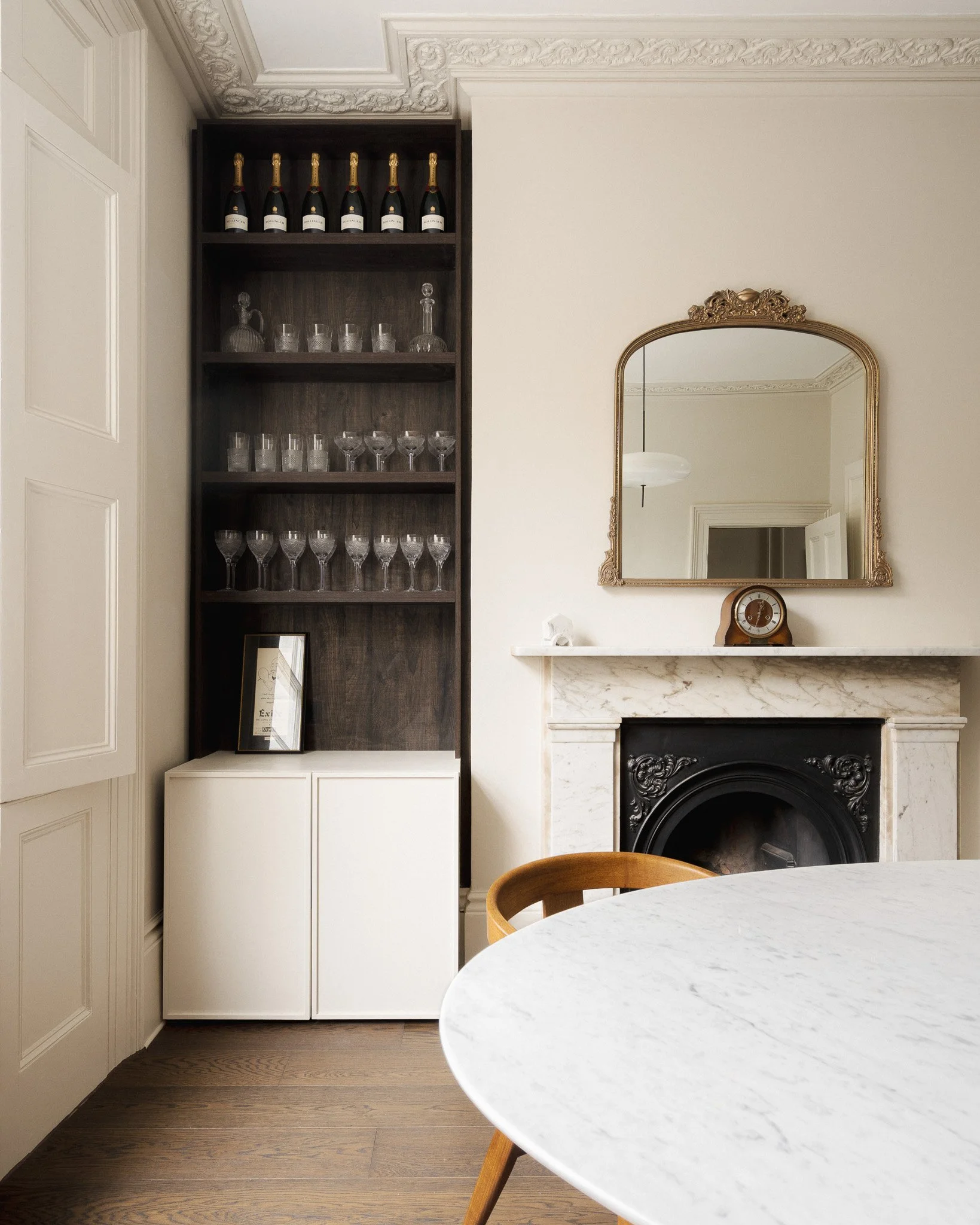
Original features retained and complemented with a restrained, contemporary material palette.
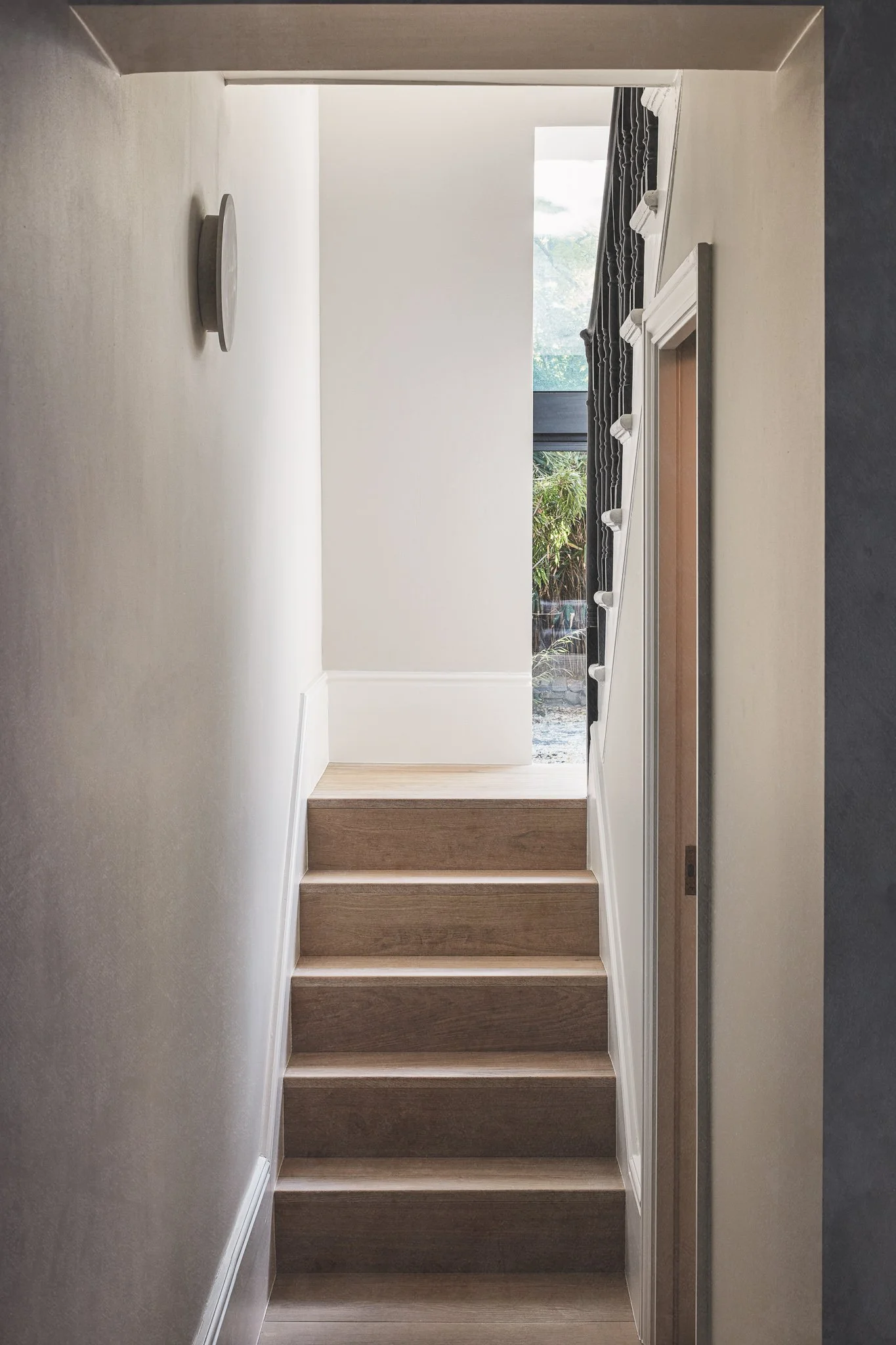
Natural light introduced into the centre of the plan through careful spatial reconfiguration.
Residential Projects in Islington
Our work in Islington focuses on full-house refurbishments and carefully considered extensions, often within sensitive historic settings.
At our Barnsbury Townhouse project, the brief was to transform a Grade II listed property into a contemporary family home while retaining its architectural integrity.
The design focused on restoring original features, carefully upgrading the building’s fabric, and introducing modern services throughout the house. In listed buildings, relatively small interventions can have a significant impact. A single new opening, a carefully adapted room arrangement or the thoughtful integration of heating, lighting and ventilation can fundamentally improve how the house functions without compromising its historic character.
Rather than imposing change on the building, the project sought to work with its existing qualities, enhancing both its performance and everyday usability.
Our Barnsbury Townhouse Case Study goes deeper: the decisions, the materials, and the thinking behind the finished home.
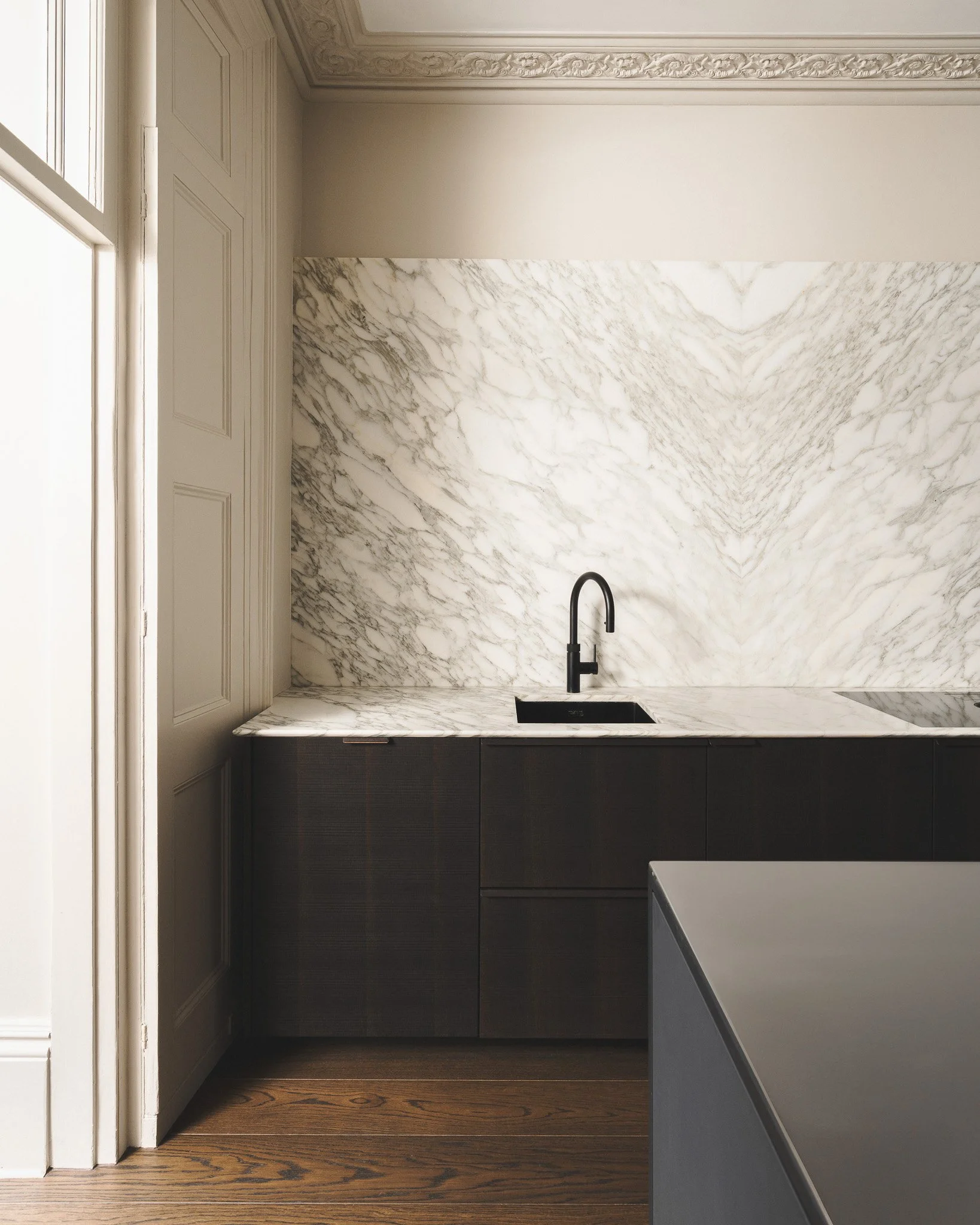
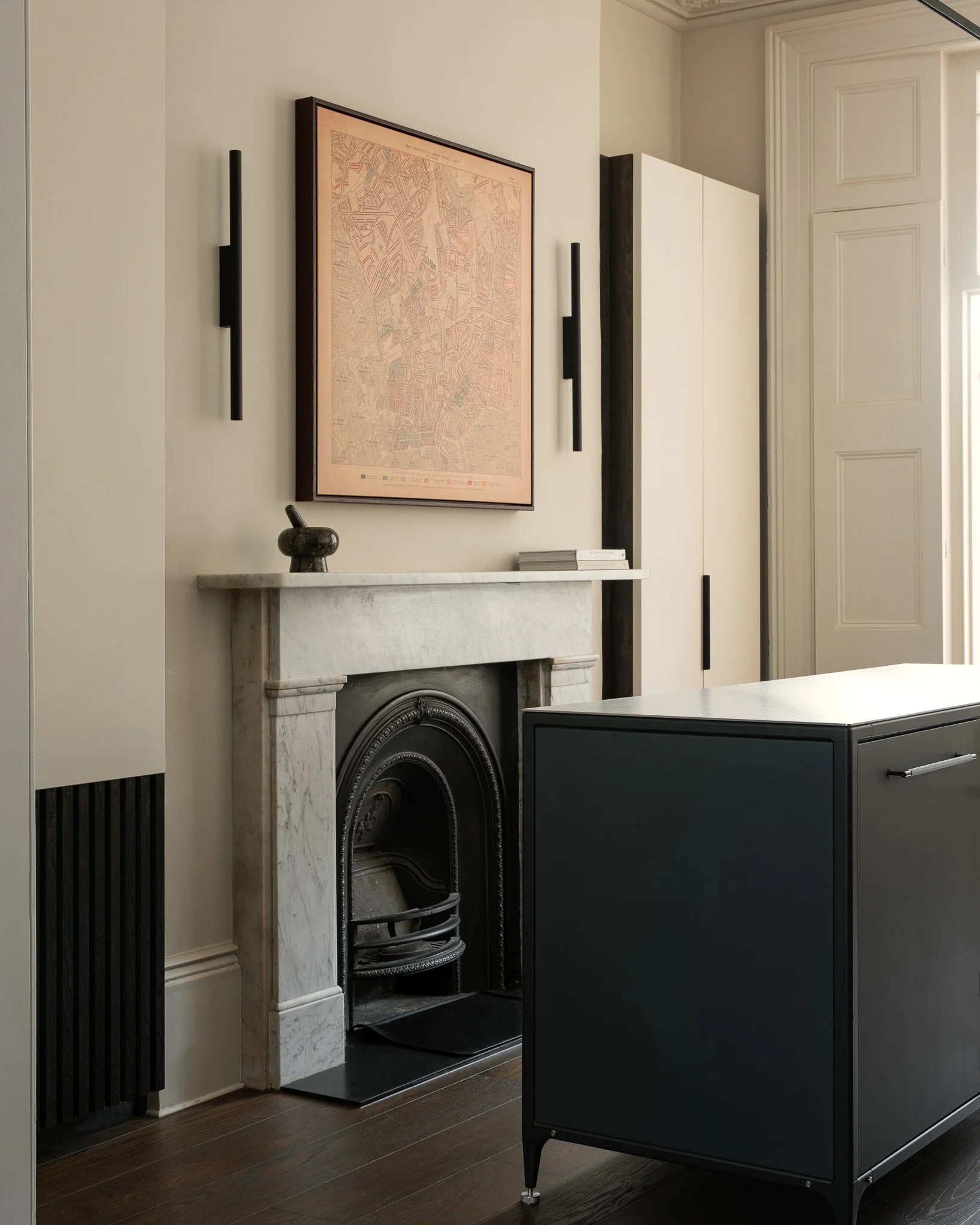
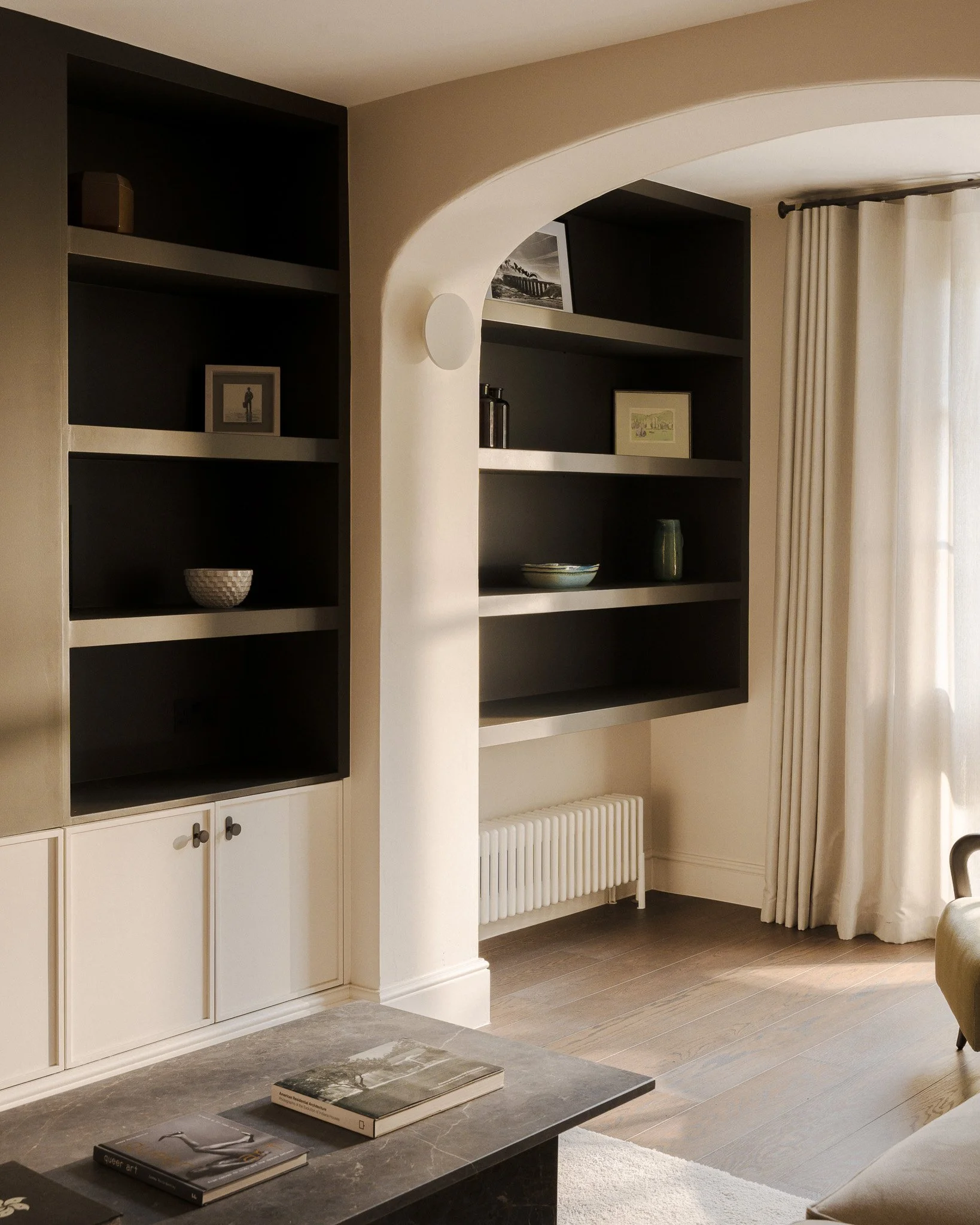
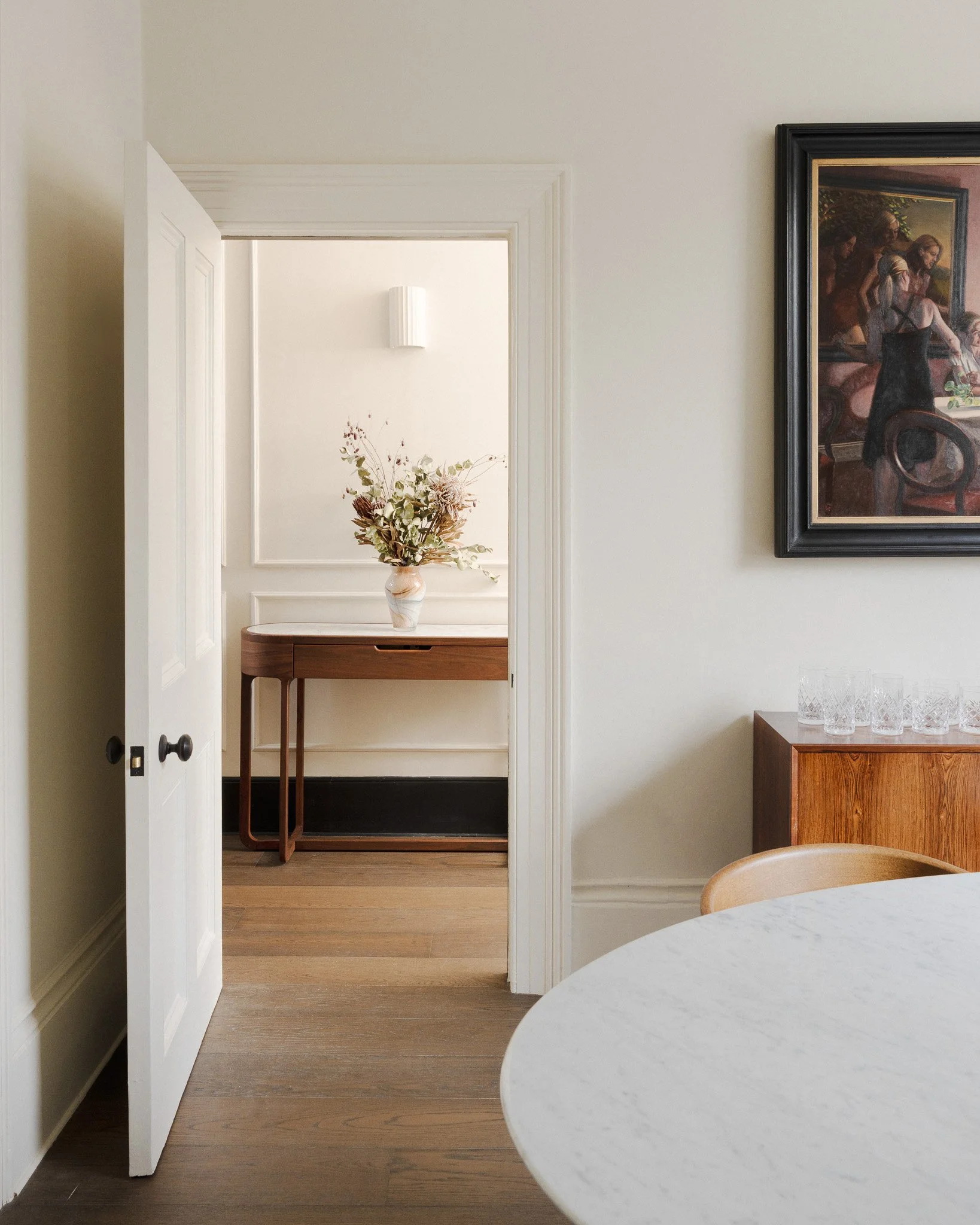
Across our wider Islington residential projects, we take a similar approach: treating the building as a complete system, where structure, layout, light and materials are resolved together from the outset.
In many cases, this leads to more meaningful improvements than simply adding space. Reconfiguring the internal arrangement of a house can often have a greater impact than increasing its size.
For a broader overview of this approach, see House Refurbishment Architects London: Transforming Period Homes for Modern Living.
Understanding Islington’s Period Homes
Much of Islington's housing stock follows a consistent pattern: Georgian and Victorian terraced houses with deep plan layouts, generous proportions and a strong relationship to the street. While these homes are inherently robust, they often present challenges that are not immediately obvious when first viewed.
These typically include:
Limited natural light in central parts of the plan
Fragmented ground floor layouts created through previous alterations
Restricted opportunities for extension and sensitivity to change, particularly at the front of the property
Poor additions to the main roof that detract from the character and performance of the building
Underutilised basement vaults and poor connections to front lightwells
Thermally and acoustically poor windows that require careful refurbishment or replacement
Outdated services, including electrics, plumbing, heating and ventilation systems that no longer meet modern expectations
Damp and moisture issues, particularly in basements or areas affected by previous alterations
Structural defects resulting from age, movement or poorly considered historic interventions
Natural light remains one of the most common challenges in Islington's terraced houses. While listed building constraints often limit structural alterations, careful consideration of layout, openings and interior design can still have a significant impact on how a space feels and functions. We explore this topic further in our article, Designing Light in Period Homes.
Rarely does a project involve just one of these issues. More often, they are interconnected, which is why we begin by understanding the building as a whole before considering individual interventions.
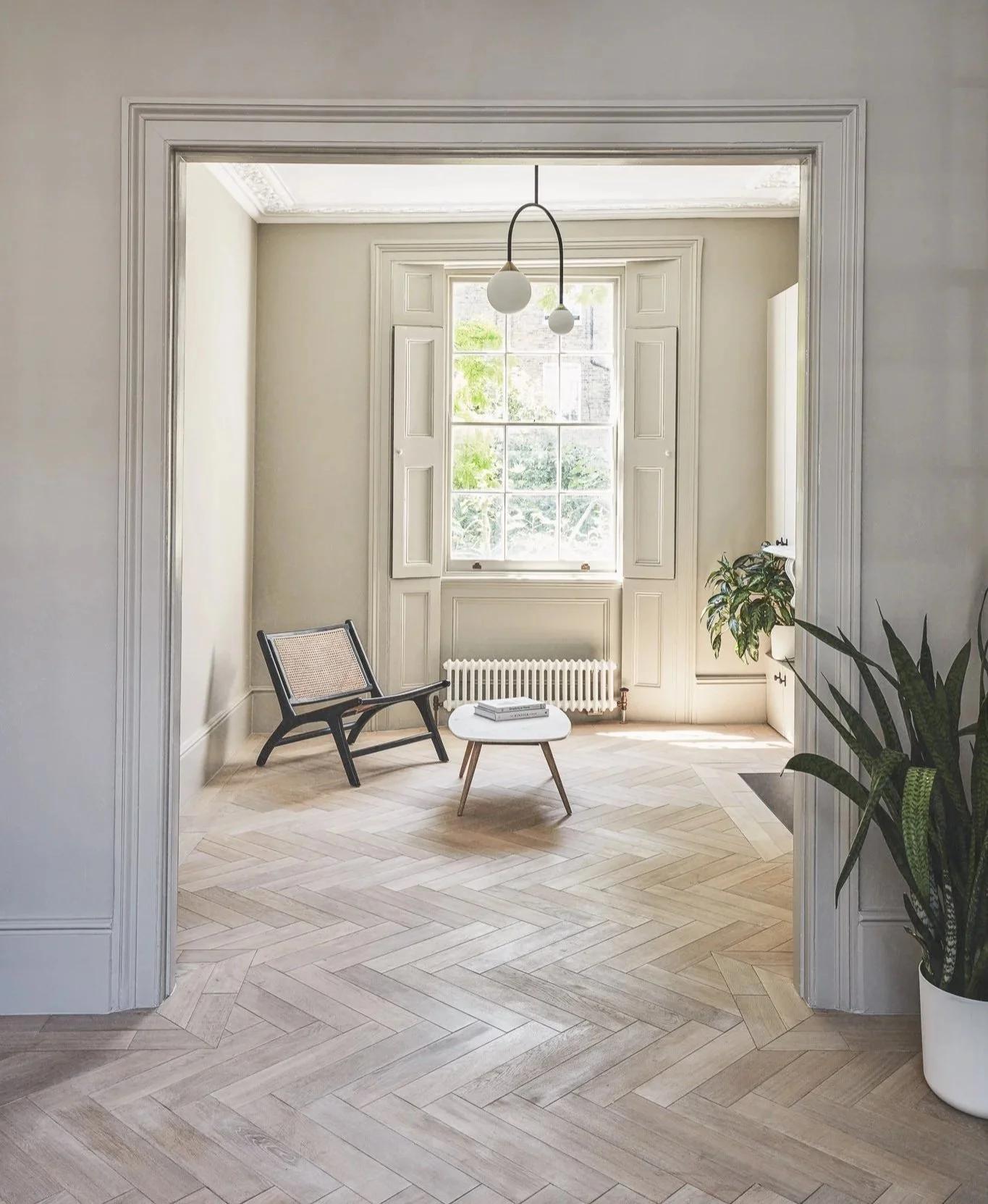
Original architectural features carefully restored as part of the refurbishment.
We begin by understanding the house as a whole. Before considering an extension or major alteration, we assess how the existing building can be adapted, upgraded and improved. This often reveals opportunities that deliver greater benefit than additional floor area alone.
A Considered Approach to Refurbishment and Extension
Our approach to residential architecture in Islington is based on working with the building, rather than against it.
Reorganising Space
Rather than viewing an extension as the starting point, we first consider how the existing house can be adapted.
In many period homes, the greatest opportunities lie within the building itself. Carefully reconfiguring the layout, improving circulation, upgrading services and making targeted alterations can significantly improve how a house functions.
Extensions often form an important part of the solution, but they are most successful when considered as part of a wider strategy. Simply adding space without addressing the existing building can leave underlying issues unresolved. By looking at the house as a whole, we can ensure that any extension works alongside broader improvements to deliver the maximum benefit.
Integrating Architecture and Interiors
The most successful refurbishments are those where architecture, interiors and services are considered together from the outset. This ensures that materials, lighting, joinery and building services are fully coordinated, creating a more coherent and refined result.
These ideas are explored further in Renovating a Victorian House in London: An Architect’s Guide to Light, Layout and Modern Living.
Listed Buildings and Heritage Considerations
A significant number of properties in Islington are Grade II listed, particularly within areas such as Barnsbury and Canonbury.
In listed buildings, protection extends to both the exterior and interior of the property. Unlike homes that are simply located within conservation areas, internal alterations often require listed building consent as well.
This can affect:
Original staircases, fireplaces and joinery
Cornicing and decorative plasterwork
Historic room layouts and proportions
Service routes and structural interventions
Window repairs and upgrades
Materials and construction methods also require careful consideration. Traditional elements such as lime plasters, timber profiles and breathable construction techniques often play an important role in maintaining the performance and character of the building.
Successfully navigating these requirements demands an understanding of both conservation principles and contemporary residential design.
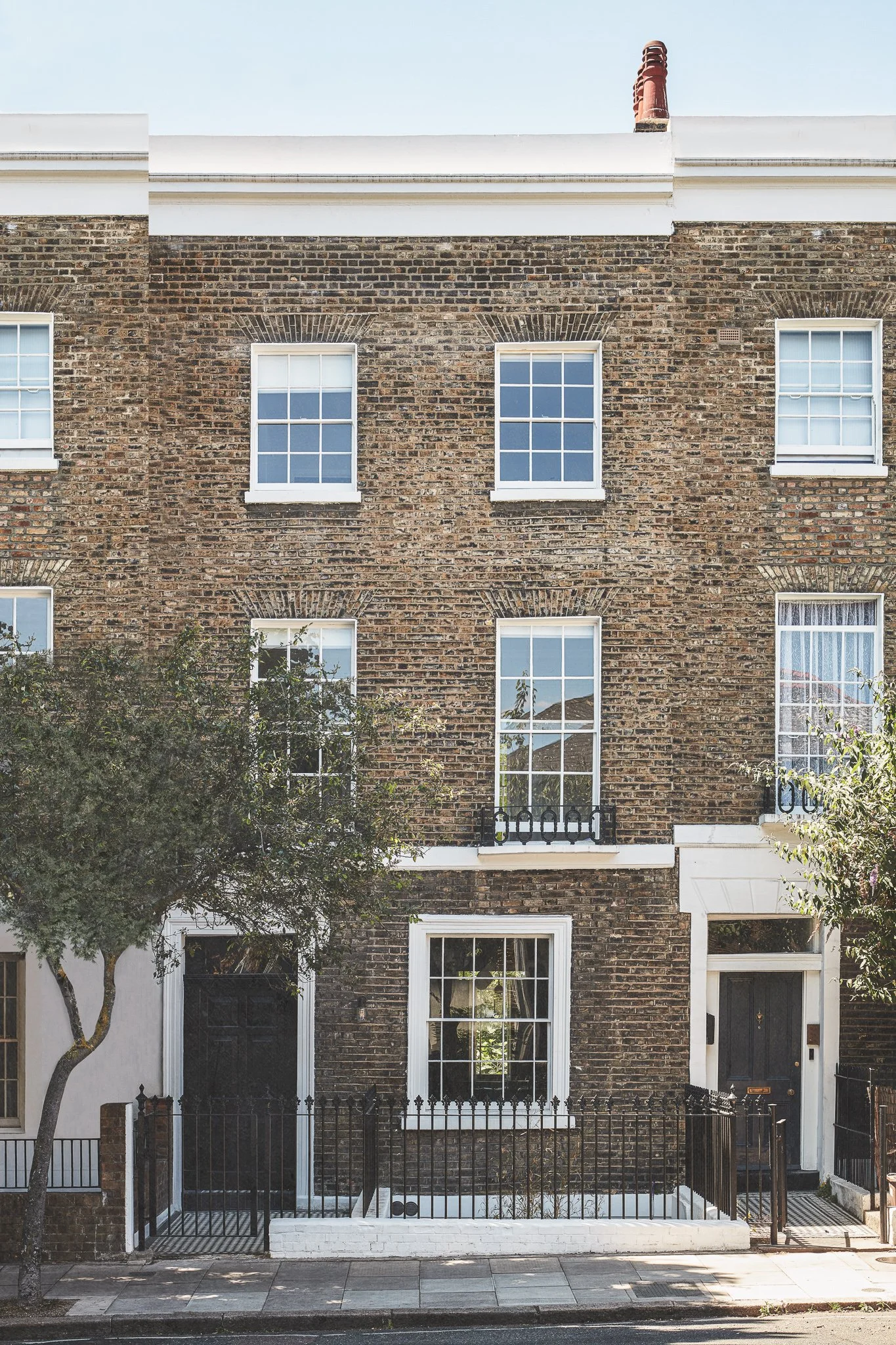
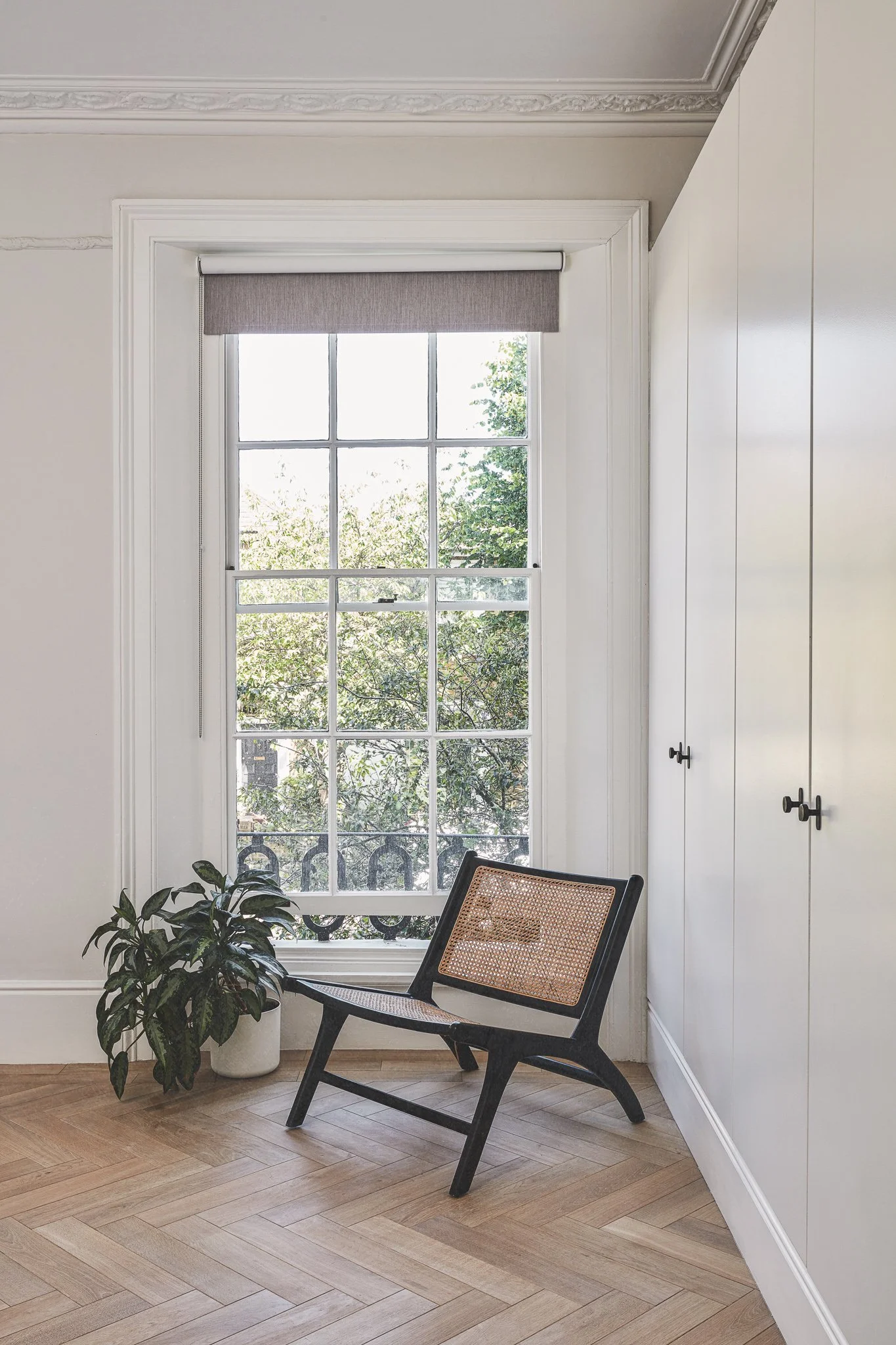
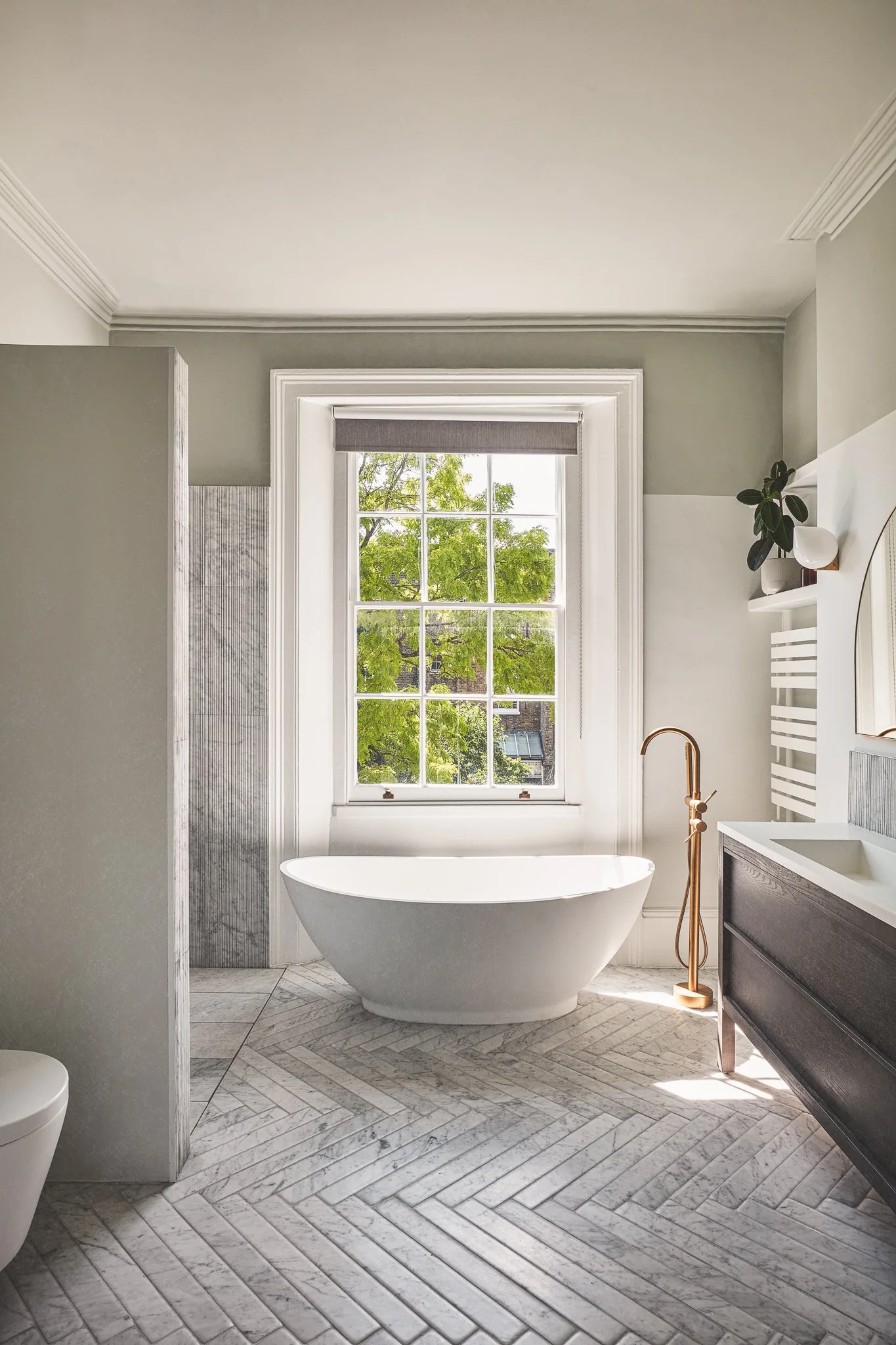
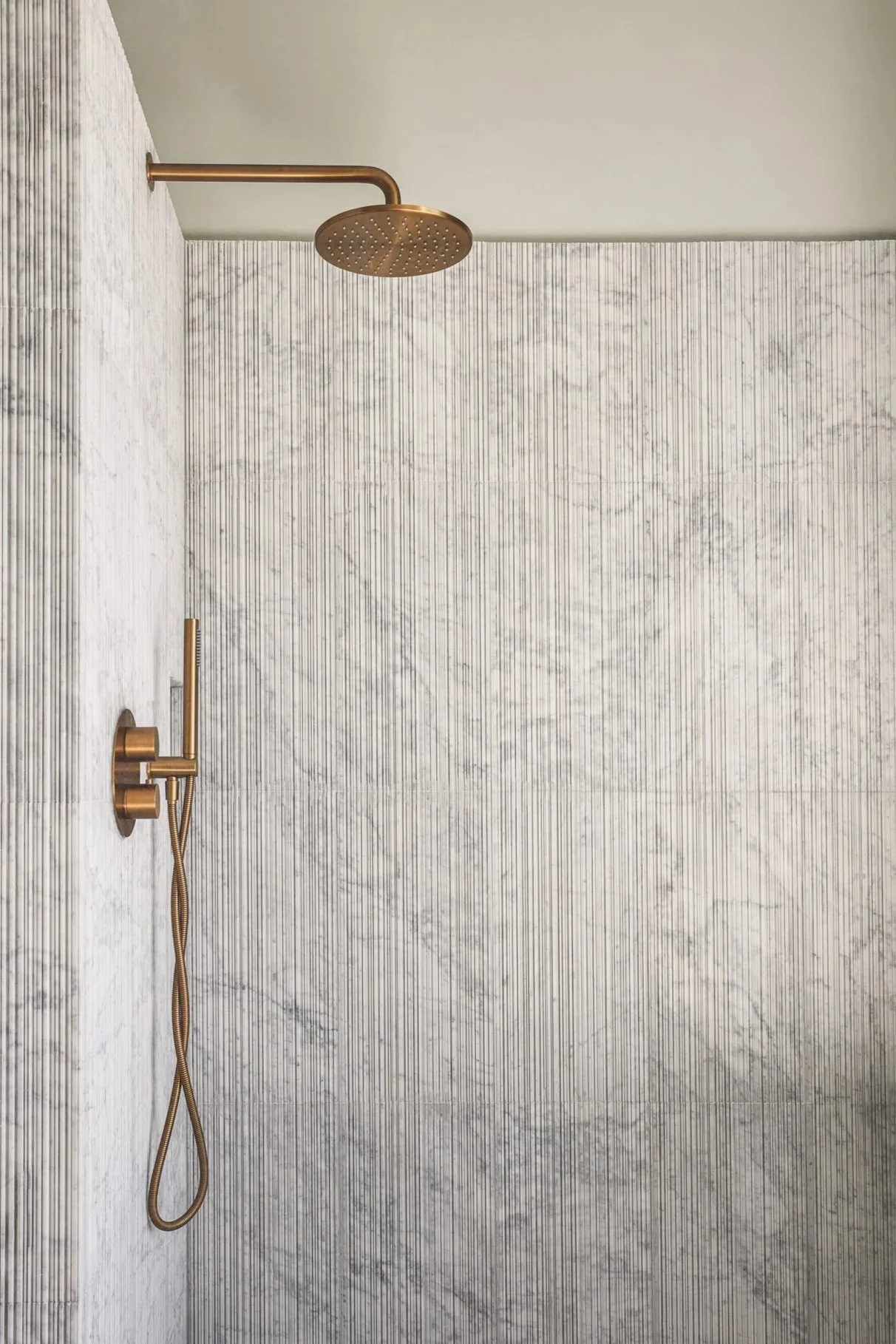
A look inside one of our projects in Islington, where we blended contemporary design with timeless materials to create a warm, light-filled home that harmonises original character with modern living.
How Our Approach to Listed Building Consent Differs
Most listed building projects begin with a specific request: an extension, a reconfigured layout or a particular design idea.
Many architects will develop proposals around these requests and seek early feedback through a pre-application submission before progressing the design further. While this can be appropriate in some circumstances, it can also add many months to the programme before a planning application is submitted.
Our approach is different.
Rather than starting with a proposed solution, we begin by understanding what the client wants to achieve from their home. We then work alongside our Heritage Consultant, a former Conservation Officer, to understand the opportunities and constraints of the building before developing a design strategy.
This allows us to identify what is likely to be acceptable, avoid unnecessary work and focus the design process on achieving the client's objectives rather than testing assumptions.
We also work closely with our in-house Planning Consultant throughout the application process. This enables ongoing dialogue with planning officers while applications are live, allowing issues to be addressed proactively and refinements to be made where necessary.
The result is a more informed and efficient route through planning and listed building consent, helping clients reach an approved scheme more quickly and with greater certainty.
Using this approach, we have never received a refusal for a Grade II listed residential project in Islington.
Why Work with an Architect in Islington
Refurbishing or extending a home in Islington involves a level of complexity that goes beyond design alone. Working with an architect experienced in listed buildings, conservation areas and residential refurbishment can help to:
Navigate planning and listed building requirements with clarity
Develop a design that responds to both the building and the client's brief
Avoid unnecessary interventions that compromise original fabric
Coordinate architecture, interiors and technical design
Deliver a more coherent and long-lasting result
Ultimately, the aim is to create a home that feels calm, considered and well-resolved, one that supports everyday life while respecting the building it sits within.
If you are planning a refurbishment, extension or listed building project in Islington, establishing a clear strategy at the outset is essential. If you would like to discuss your project, contact our team to explore how a considered architectural approach can support both the design and delivery of your home.