House Refurbishment Architects London: Transforming Period Homes for Modern Living
-
Daniel is the Founder and Design Director of Rees Architects. He is an RIBA-qualified Architect with over 20 years of experience delivering high-quality design solutions for residential and commercial clients. Daniel has a passion for creating bespoke, sustainable, and functional spaces that enhance both lives and the environment.
RIBA Membership No. 12018397 · ARB Registration No. 080523H
Refurbishing a period house in London is rarely just about adding space. More often, the real opportunity lies in rethinking how the house works as a whole, not just in terms of space, but in how it is experienced day to day. This includes how rooms connect, how natural light moves through the plan, how the building relates to the garden, and how it supports modern family life without losing its character.
As house refurbishment architects in London, we regularly work with Victorian terraces, Edwardian houses, Georgian homes and Grade II listed buildings. In many cases, these houses have been altered incrementally over time. Extensions have been added, bathrooms inserted where there was once an outside toilet or coal store, and services upgraded in isolation. The result is often a house that has enough space on paper, but feels dark, disconnected and difficult to live in.
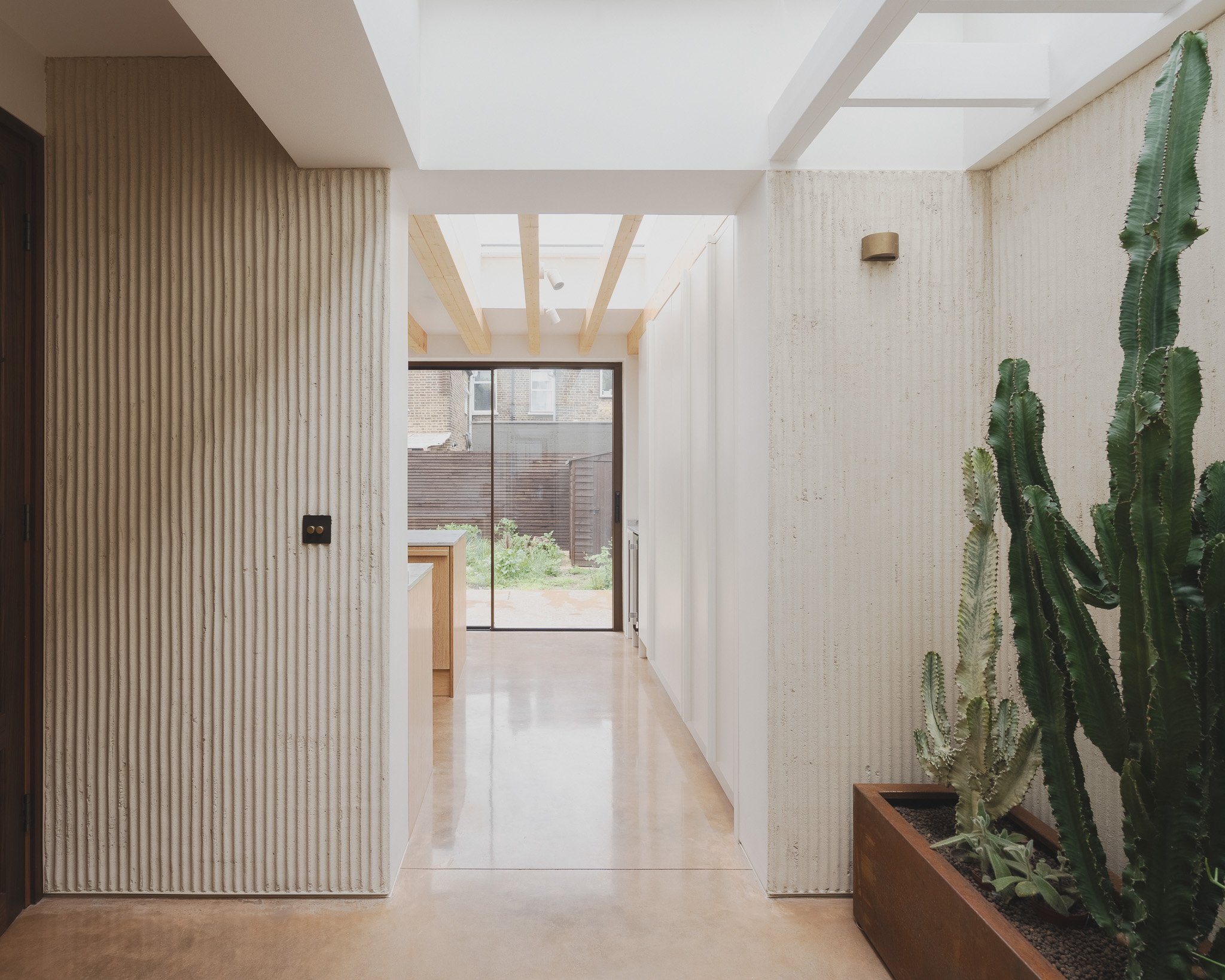
Reorganised living spaces can transform how a period house feels and functions.
A well-considered refurbishment resolves these issues at their source, allowing the house to function coherently again. Our role is not simply to add space, but to make the house feel fundamentally better to live in.
Why homeowners choose refurbishment rather than extension alone
A common starting point for many homeowners is the assumption that more space will solve the problem. While an extension can be valuable, it does not address the underlying issues within the existing house. These often include poor layout, outdated services, lack of storage, or weak connection between rooms.
In reality, once a project involves extending, the existing house often needs upgrading anyway. Electrical systems, plumbing, windows and finishes rarely allow for partial improvement without affecting the whole. At that point, it becomes more effective to step back and consider the property as a single, integrated project.
There is also a practical and financial logic to this approach. Piecemeal works tend to duplicate costs such as scaffolding, site setup, labour and decoration. They also extend disruption over a longer period. A full refurbishment allows these elements to be coordinated, reducing inefficiencies and enabling a more resolved outcome.
Every project that I’ve ever done, looking at it as a big picture, is the best place to start.
Understanding London’s period houses
Much of London’s housing stock was built for a very different way of living. In Victorian houses in particular, the kitchen was historically a secondary, service-driven space, while the principal rooms were located at the front of the house and used for receiving guests. We explore this evolution in more detail in our guide to renovating a Victorian house in London.
Today, that hierarchy has shifted. Clients typically want larger, more social kitchen, dining and living spaces, better connection to the garden, and a clearer distinction between sociable and private areas. The challenge lies in adapting the existing structure to support this way of living.
These houses also present recurring issues. Previous extensions may have compromised light in the centre of the plan. Bathrooms are often poorly positioned. Circulation can be inefficient, with rooms doubling as passageways. Storage is frequently inadequate. On a technical level, many properties suffer from poor insulation, limited ventilation and ageing services.
A period house refurbishment in London therefore requires more than surface-level improvement. It demands a careful reorganisation of the building that aligns spatial planning, performance and character.
How we approach a house refurbishment project
Understanding the brief
The starting point for any refurbishment is not the building itself, but the brief. Understanding how a client wants to live is fundamental. This includes how spaces are used daily, how people move through the house, and what should feel open, intimate, calm or social.
Understanding the existing building
Alongside this, we analyse the building in detail. Orientation is a key driver, influencing how light enters the house throughout the day and across seasons. Surrounding conditions such as neighbouring buildings, overlooking, trees and site constraints are equally important. Planning context also plays a role early on, particularly where conservation areas or listed status apply.
Reworking the house as a whole
From there, the design process focuses on identifying the key moves that can unlock the entire house. This may involve reconfiguring circulation, repositioning a staircase, introducing a lightwell, or adjusting how the front and back of the house relate to each other.
Rather than approaching the project as a collection of rooms, we consider the house as a single spatial composition, where each part supports the whole.
This approach to reconfiguring space is illustrated in our Cacti Vista House, where the existing layout was carefully reworked to improve flow, introduce clearer connections between rooms, and create a more intuitive relationship between the house and garden.
Improving layout, light and flow
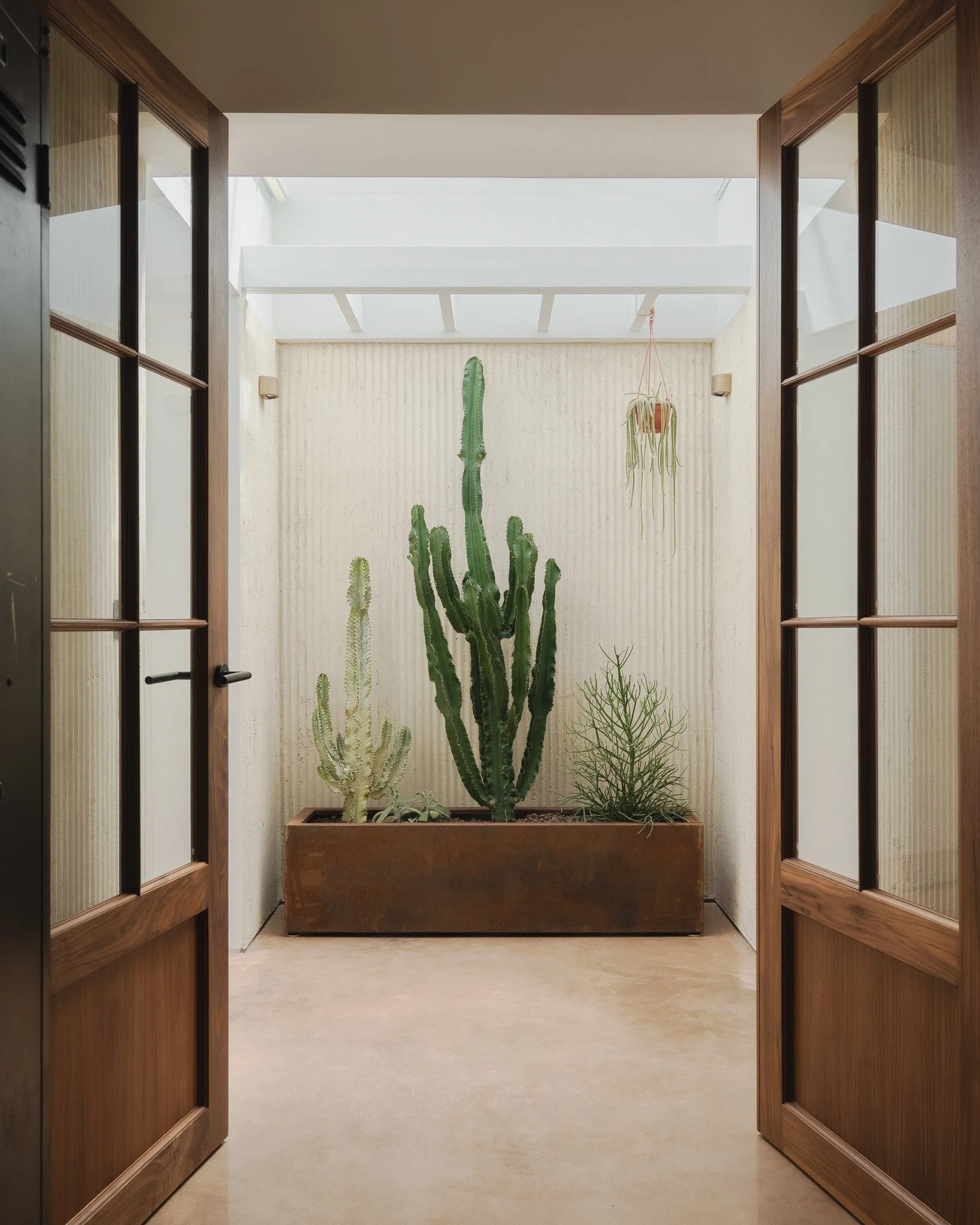
Carefully positioned rooflights bring natural light deep into the plan, changing how the space is experienced throughout the day.
Light is one of the most powerful tools in shaping a period home. We approach it early in the design process, using section, rooflights and spatial sequencing to bring light deep into the plan.
The most successful projects treat light as part of the architecture itself, not something added later.
In many London houses, particularly narrow terraces, the perception of space is shaped less by floor area and more by how the house is connected. A room can feel significantly larger when it is visually linked to adjacent spaces or when there is a long view through to the garden.
Spatial planning therefore focuses on both physical and visual continuity. Open plan is not always the answer. Instead, we often create a series of connected spaces where openings, sightlines and thresholds allow the house to feel open while still retaining definition and privacy.
Volume, height and connection
Ceiling height plays an important role in this. More generous volumes in key areas such as kitchens or living spaces can create a sense of openness. Slightly lower ceilings in more intimate rooms provide contrast and comfort. These shifts in scale help articulate the experience of moving through the house.
Working with natural light
Natural light is central to this process. In many ways, the building becomes a framework for light, shaped carefully to bring variation, depth and atmosphere into everyday spaces.
Light is shaped through careful placement of windows, rooflights, internal openings and vertical connections such as staircases. Rather than relying solely on larger glazing, the aim is to create a more nuanced and dynamic quality of light that changes throughout the day and brings depth to the space.
Balancing modern living with historic character
Refurbishing a period home requires a careful balance between retaining what is valuable and introducing what is necessary.
We look to preserve original elements where they contribute meaningfully to the character of the house. These include proportions, sash windows, brickwork, timber floors and existing detailing. They provide a sense of continuity and depth that cannot be replicated.
At the same time, new interventions should be clearly of their time. Extensions, insertions and reconfigured spaces are designed to support contemporary living without attempting to mimic the original architecture.
This approach is particularly relevant in Victorian house renovation projects, where the inherent character of the building is strong but the layout requires significant adaptation. The aim is not to recreate the past, but to allow the house to evolve in a way that feels natural and considered.
Materials, longevity and atmosphere
Durable and breathable materials
Material selection plays a central role in how a refurbished house is experienced over time. We prioritise materials that are durable, natural and capable of ageing well, including brick, timber, stone, lime plaster and breathable finishes.
In older buildings, material choice also has a direct impact on performance. Breathable insulation systems such as cork or wood fibre, combined with lime-based plasters, allow traditional walls to regulate moisture more effectively than impermeable systems. This helps avoid issues such as damp and mould.
Material and atmosphere
Beyond performance, materials contribute significantly to atmosphere. Natural materials interact with light in a more varied way, revealing texture, depth and subtle changes throughout the day. They also influence acoustics, touch and the overall sensory quality of a space.
A similar approach can be seen in our Barnsbury Townhouse, a Grade II listed building where a considered retrofit strategy was developed to improve thermal performance and environmental quality while carefully preserving the existing fabric of the house.
The most sustainable approach is often the simplest: using materials for as long as possible. Materials should improve with age, becoming richer through use rather than needing to be replaced. This approach is less about style and more about permanence.
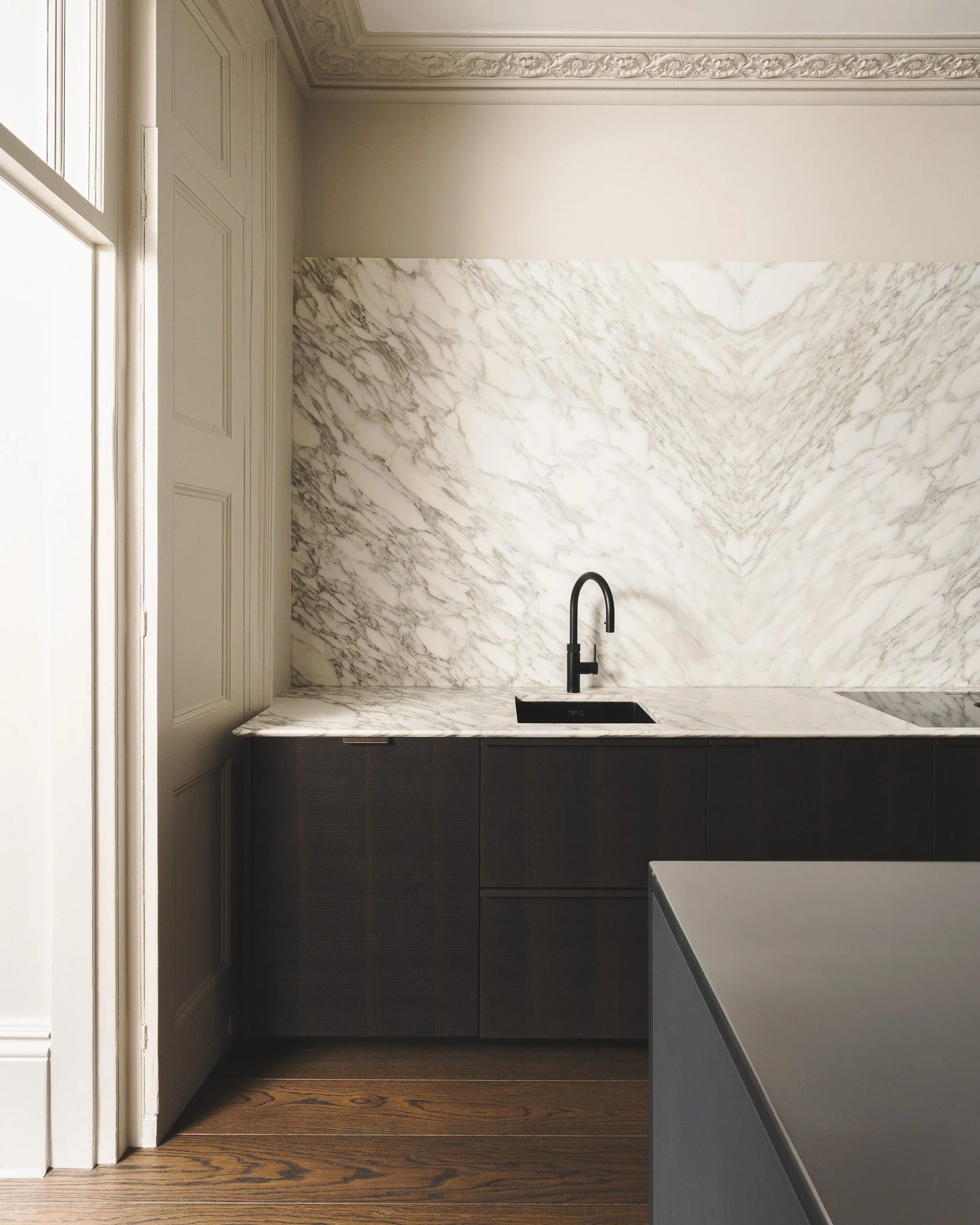
Durable, breathable materials support both longevity and atmosphere in older homes.
Energy performance and retrofit in older homes
Thermal performance of the building
A refurbishment provides an opportunity to improve the energy performance of a building, though this requires a coordinated approach. The thermal fabric, including walls, roof, floors and windows, must be considered alongside the systems used to heat and ventilate the space.
There is no single solution that applies to every house. The appropriate strategy depends on the building, the level of intervention and the client’s priorities. In many cases, upgrading windows and insulating the roof offer the most immediate improvements. More comprehensive upgrades, such as internal wall insulation or airtightness strategies, are typically addressed as part of larger refurbishments.
Ventilation and air quality
Ventilation is an equally important consideration. Older houses often rely on incidental airflow, which can lead to poor air quality and condensation. As buildings become more airtight, controlled ventilation such as heat recovery systems can improve internal conditions significantly. This reduces moisture levels while maintaining energy efficiency.
Planning, conservation areas and listed buildings
Planning considerations vary across London, but conservation areas and listed buildings introduce additional complexity.
Conservation Areas
In conservation areas, the focus is primarily on the external appearance of the building. Article 4 directions may restrict changes to windows, materials, rooflines and front elevations. These constraints often require a more sensitive and considered design approach, particularly on the street-facing side of the property.
Listed Buildings
Listed buildings involve a broader level of protection, covering both the exterior and interior fabric. Any alterations must be carefully assessed in terms of their impact on the historic building. This requires a detailed understanding of both architectural and planning considerations, and a design approach that balances preservation with practical adaptation.
What changes when a refurbishment is done well
When a refurbishment is successful, the most significant change is not simply the additional space or improved finishes. It is the way the house supports daily life.
Spaces feel calmer, lighter and more connected. Movement through the house becomes more intuitive. Light, proportion and material work together to create an environment that feels considered and comfortable.
At its best, a home offers something more intangible, a sense of ease and quiet quality that is felt rather than seen. A well-designed refurbishment allows a house to move beyond function and become something that supports daily life in a quieter, more meaningful way. The aim is not simply to create a better layout, but to create a home that feels calm, coherent and enduring. One that reflects how you live, and continues to do so over time.
“To be able to go into your house and feel special is quite important.”
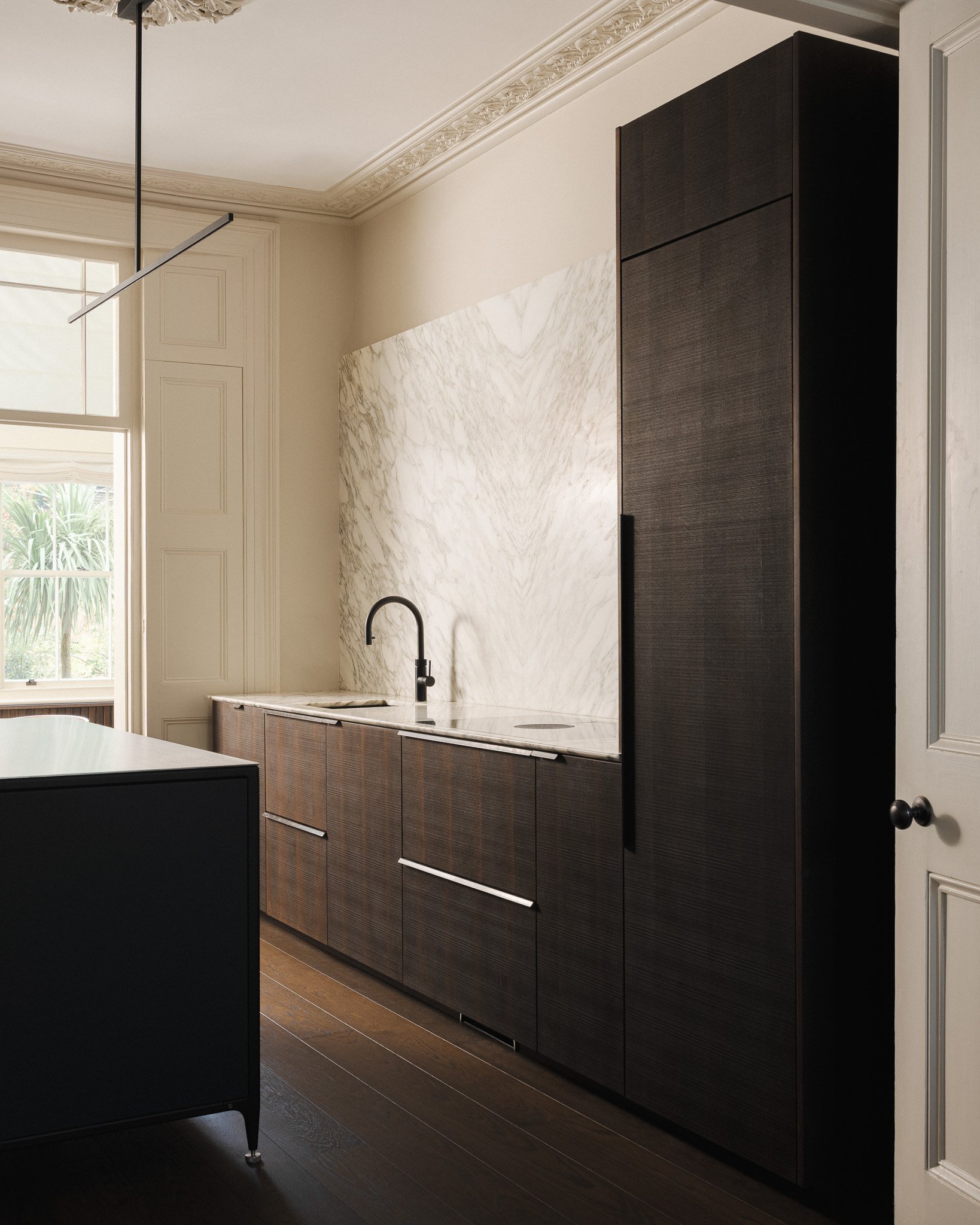
Refurbishment works best when historic character and new interventions are held in balance.
If you are considering a house refurbishment in London, contact Rees Architects to discuss your project.